Abu's Smile
- Whitney Gerdes
“Come, teacher. Come sit with me.”
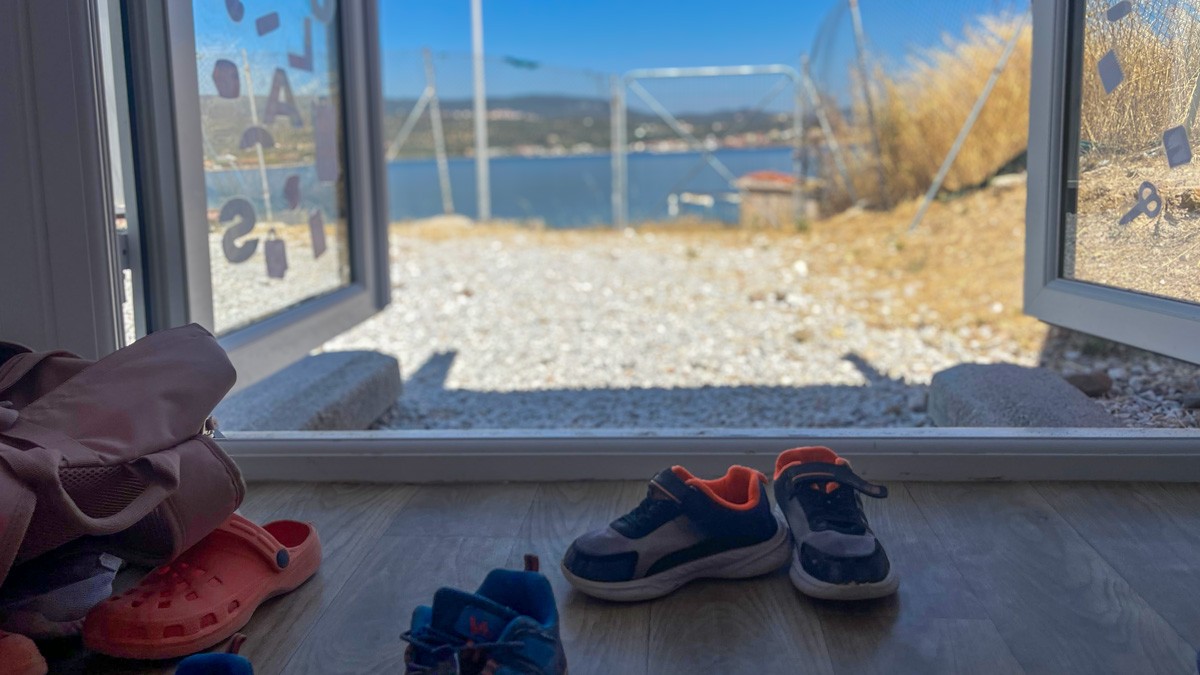
I saw him there, standing by the door when I walked into the container classroom in a refugee camp on Lesvos—Abu from Eritrea, with a big smile on his face. He welcomed me immediately. “Come, teacher. Come sit with me.”
I sat by Abu in the classroom of eight-year-olds while he worked on his worksheet, and we talked about his favorite color. Then we played Uno while the children chattered in Arabic and Turkish.
I noticed Abu had a deformed mouth, which made him constantly drool. The other children in the class stopped now and then to pass him a napkin to wipe his mouth. When he needed another napkin, I passed him one.
He looked at me and pointed to his mouth, emotion evident in his dark eyes. “I hate this,” he said bluntly.
My heart lurched. “Abu, I hate this for you. But you are so smart and gifted, and I'm so happy that I get to be here with you today.”
Abu got a big smile on his face and wiped his chin. He went back to playing his cards and promptly beat me at Uno.
Two days later, when I entered a different classroom, Abu was there again.
His face broke into that same brilliant grin. “Teacher, you are back!”
Abu is Why
As I sat in this classroom—a container in a refugee camp on Lesvos, with kids from Afghanistan, Syria, and just one Eritrean, Abu—I felt, deep in my soul, the reason I work in refugee education. Abu is why this work matters. Even if he doesn't master English or geography, here he can simply be a normal kid. He can talk about his disability, laugh, and feel safe. This space gives him value, dignity, and belonging.
Creating trauma-informed classrooms lets kids like Abu experience normalcy. Abu’s smile reminds me why this work matters: to make a difference for these incredible children who survive so much.
CLICK to Learn About Refugee Education